
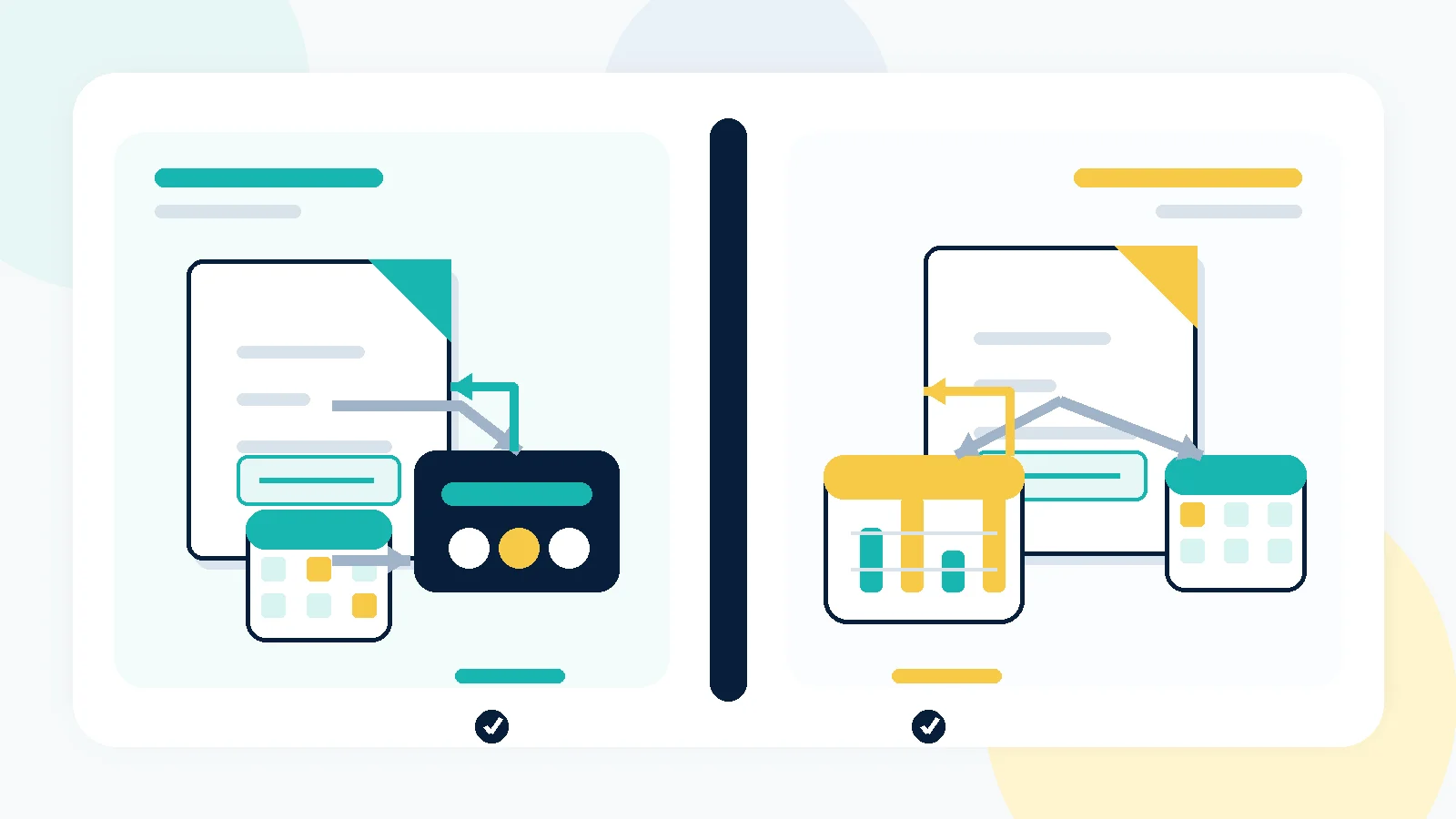
Cash basis records money when it actually moves. Traditional accounting records it when the invoice goes out. Same work, same year, sometimes a different tax bill.
Cash basis is now the default for sole traders and partnerships. You opt out if you want traditional accounting. Limited companies can’t use it at all.
This guide explains both methods, who can use each, and how to choose.
Quick answer
Cash basis counts income when the customer pays you. Traditional accounting counts it when you raise the invoice. Cash basis suits small traders who get paid late. Traditional accounting suits businesses with stock, credit terms, or lenders to satisfy. Companies use traditional accounting only.
What is cash basis accounting?
Cash basis records income when the money lands and costs when the money leaves. You invoice a customer in March and they pay in May. Under cash basis, that sale belongs to May. Unpaid invoices are not income. You do not pay tax on money you have not received.
GOV.UK calls cash basis accounting the standard way for sole traders. Partnerships without corporate partners use it too.
The rule is simple. Follow the bank.
That also helps with cash flow. If customers pay 60 days late, you do not end up with a tax bill in the earlier year.
Recording the transactions is one job. Working out what they mean is another. We cover what bookkeeping and accounting each involve separately.
What is traditional accounting?
Traditional accounting, also called accrual accounting, records income on the invoice date. It records costs on the date you were billed. Payment timing does not matter. A March invoice paid in May still belongs to March. It gives a truer picture of a trading year.
This method matches income to the work that earned it. That is the point of it.
It also handles the things cash basis handles badly. Stock, work in progress, and money owed in both directions all sit in the accounts.
Lenders and investors expect it. So does anyone reading a balance sheet.
Who can use cash basis in the UK?
Sole traders and partnerships without corporate partners can use it. Limited companies and limited liability partnerships can’t. A partnership with a company as a partner can’t either. HMRC also excludes some specialist trades. Lloyd’s underwriters and herd basis farmers are two examples.
GOV.UK sets out who can use cash basis. The excluded list is longer than most guides show:
- limited companies
- limited liability partnerships
- partnerships with one or more corporate partners
- Lloyd’s underwriters
- farming businesses with a current herd basis election
- farming or creative businesses with a fluctuating profit averaging claim
- businesses claiming business premises renovation allowance within 7 years
- businesses carrying on a mineral extraction trade
- businesses that have claimed research and development allowance
If you run more than one business, you choose separately for each one.
What changed in 2024?
Cash basis moved from opt in to default. Sole traders and partnerships used to elect into it. Now GOV.UK calls it the standard method. You elect out for traditional accounting. The current guidance does not set a turnover limit for using it.
That catches people out at return time. Nothing on the form makes the change obvious.
There are two practical effects. First, a new sole trader lands on cash basis without choosing it. Second, anyone who wants traditional accounting has to say so.
Check which method your last return actually used before you assume anything.
What are the advantages and disadvantages?
Cash basis is simpler and easier on cash flow. You pay tax on money you’ve received, not money you’re owed. Traditional accounting gives a fuller picture of the year, but it can tax you on unpaid invoices.
Here is the comparison side by side.
| Point | Cash basis | Traditional accounting |
|---|---|---|
| Income counted when | Money arrives | Invoice is raised |
| Costs counted when | Money leaves | Bill is received |
| Tax on unpaid invoices | No | Yes |
| Handles stock well | No | Yes |
| Shows money owed to you | No | Yes |
| Produces a balance sheet | No | Yes |
| Effort to run | Lower | Higher |
| Available to companies | No | Yes |
Cash basis has one blind spot worth naming. Your accounts will not show who owes you money.
That is fine with two customers. It is risky with forty.
Can limited companies use cash basis?
No. Cash basis is closed to limited companies and limited liability partnerships. Companies prepare statutory accounts, and those include a balance sheet. A balance sheet needs debtors, creditors, and stock, which cash basis does not track. Directors use traditional accounting from day one.
The record-keeping duty is heavier too. GOV.UK sets out the company accounting records a director keeps. They cover money in and out, assets, debts, and stock.
Those five items are exactly what cash basis leaves out. That is the reason for the rule, not a technicality.
We set out the retention periods by business type in business record-keeping requirements.
What happens when you switch?
Watch for double counting. Switch to traditional accounting and old unpaid invoices enter the new year. Move the other way and payments received for old invoices can land twice. Adjustments exist for both directions, and they need care in the switch year.
Switching is not just a box tick. The transition year needs a proper set of figures.
Two questions decide it. What was unpaid on the last day of the old method? What was owed to suppliers on that date?
Get those two lists right and the adjustment is straightforward. Guess them and you could pay tax twice on the same sale.
Growing businesses usually hit this when they start holding stock, offering credit terms, or applying for finance.
Switching year? We handle the transition figures as part of our small business bookkeeping services.
A worked example: one year, two methods
Three invoices show the difference. The trader raises all three in one tax year. Two get paid in that year and one does not.
| Invoice | Raised | Paid | Cash basis year | Traditional year |
|---|---|---|---|---|
| £4,000 | 12 June | 30 June | Year 1 | Year 1 |
| £6,000 | 2 February | 20 February | Year 1 | Year 1 |
| £9,000 | 28 March | 14 May | Year 2 | Year 1 |
Cash basis puts £10,000 in year one. Traditional accounting puts £19,000 in year one.
The trader pays tax on £9,000 a year earlier under traditional accounting. That is before the customer has paid.
Reverse the picture over a full trading life and the totals match. The difference is timing, not amount.
Timing still matters. A late-paying customer at year end can move a whole tax bill.
Which should you choose?
Choose cash basis if you are a sole trader with few customers and no stock. It is simpler and it protects your cash flow when people pay late.
Choose traditional accounting if you hold stock, sell on credit, or need a balance sheet. Lenders and grant bodies will ask for one.
If you run a limited company, the choice is made for you.
DASA’s small business bookkeeping service works in either method and handles the year you switch. Tell us your business type and whether you hold stock. Get a quote and we will send you our current pricing.
This article gives general information about UK accounting methods. It is not financial, tax, or legal advice. Every business is different. Speak to a qualified accountant about your own situation.
Frequently asked questions
What is cash basis accounting?
Cash basis records income when the money lands and costs when the money leaves. Invoice a customer in March and get paid in May, and the sale belongs to May. Unpaid invoices are not income, so you do not pay tax on them yet.
What is traditional accounting?
Traditional accounting, also called accrual accounting, records income on the invoice date and costs on the date you were billed. Payment timing does not matter. It gives a truer picture of a trading year and produces a balance sheet.
Who can use cash basis accounting in the UK?
Sole traders and partnerships without corporate partners. Limited companies and limited liability partnerships cannot. HMRC also excludes Lloyd’s underwriters, farmers with a herd basis election, averaging claimants, mineral extraction trades, and R&D allowance claimants.
Can a limited company use cash basis accounting?
No. Cash basis is closed to limited companies and LLPs. Companies prepare statutory accounts that include a balance sheet, and a balance sheet needs debtors, creditors, and stock. Cash basis does not track any of those.
Is cash basis now the default in the UK?
Yes. GOV.UK describes cash basis as the standard way for sole traders and partnerships to record income and expenses. You elect out of it if you want traditional accounting, rather than electing into it.